
Waking up with a dry mouth, a slightly scratchy throat, and an irresistible thirst…sound familiar? This minor nighttime discomfort affects far more women than you might think. And while it's easy to ignore, it can also be your body's subtle message trying to get your attention. Breathing patterns, evening habits, lifestyle: sometimes surprising clues lie hidden behind this seemingly ordinary sensation. Ready to uncover the truth, without dramatizing, but with kindness?
Breathing through the mouth during the night
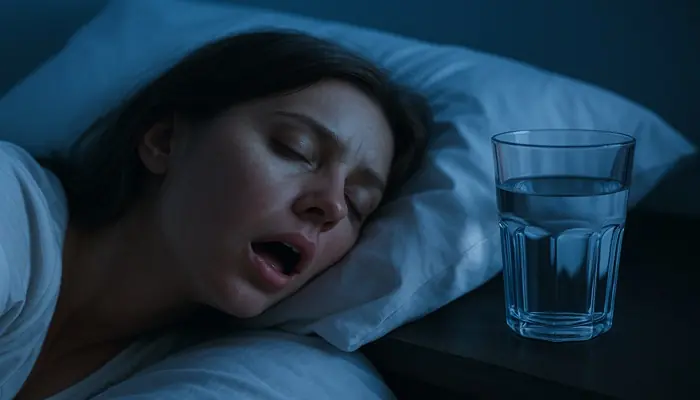
Do you sleep with your mouth slightly open without realizing it? This is one of the most common causes. When air doesn't pass through the nose, natural moisture evaporates more quickly, leaving the tongue and throat dry. A blocked nose, seasonal allergies, or a simple cold: anything that obstructs nasal breathing can contribute to this phenomenon and explain an uncomfortable awakening due to a dry mouth at night .
Snoring and restless sleep
Snoring isn't just an annoying noise for your partner. It often involves prolonged mouth breathing, which can lead to dry mouth. If your nights are disturbed and your mornings are tiring, a dry mouth can be one of the first signs of poor sleep quality.
Lack of hydration during the day

Sometimes the answer is quite simple: you're not drinking enough. Insufficient hydration naturally reduces saliva production, especially at night. After a long day, a salty dinner, or a glass of alcohol, the body draws on its reserves, and the mouth pays the price.
Some everyday treatments
Many common medications can cause a dry mouth, especially at bedtime. When the body slows down, saliva production decreases. If this sensation appeared after a change in medication, it may not be a coincidence.
Nighttime acidity sensations
Lying down can promote mild acid reflux, sometimes without significant pain. This subtle irritation dries out the mucous membranes and leaves an unpleasant taste upon waking. A dry throat accompanied by a slightly hoarse voice in the morning is often a sign.
Female hormonal variations
The body changes throughout life cycles, and so does the mouth. Pregnancy, hormonal transitions, or even simple fluctuations in the menstrual cycle can all influence overall hydration. The result: more pronounced dryness at night, which is nothing to worry about.
Metabolic imbalances

Intense thirst, frequent awakenings to go to the bathroom, and a very dry mouth can all occur together. When these signs appear, it's best to listen to your body and seek advice to gently assess the situation.
Evening habits that don't help
Late-night coffee, a glass of wine, a cigarette, or a strong alcoholic mouthwash: these everyday habits have one thing in common—they dry out the mouth. Just before bed, they can disrupt the mouth's natural balance and amplify nighttime discomfort.
Good habits for more comfortable nights
Drinking regularly throughout the day, ventilating the bedroom, breathing through the nose, and simplifying evening routines often make all the difference. Less dry air and a gentler bedtime routine help keep the mouth comfortable all night and reduce nighttime dry mouth .
A dry mouth upon waking is not inevitable: by paying attention to these signals and adjusting a few habits, it is often possible to regain peaceful nights and a fresh smile in the morning.


0 Comments:
Enregistrer un commentaire