
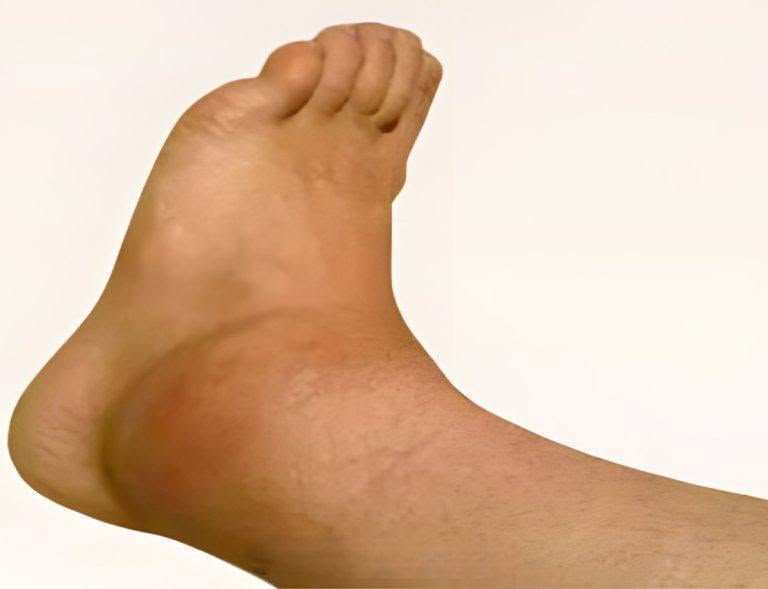
Do you wake up in the evening and notice that your ankle or foot is more swollen than usual? Do you feel warmth, redness, or pressure without pain? Or perhaps a throbbing, pulling sensation with every step? Thousands of people suffer from swollen ankles and feet every day—and while it’s not always a cause for panic, it deserves attention.
As a physical therapist, I receive many questions about this topic. In this detailed article, I provide clear answers to the most frequently asked questions, so you know what to look out for and what you can do yourself.
 What are the symptoms of ankle swelling?
Ankle swelling can usually be recognized by the following symptoms:
Edema: Swelling of the ankle, which sometimes extends to the foot, knee, or thigh.
Redness and a feeling of warmth: Especially noticeable in cases of inflammation or infection.
Pain or stiffness: During movement, but sometimes also at rest.
A cracking or popping sensation during movement.
Instability or weakness: as if the ankle suddenly gave way when walking.
Limited range of motion: difficulty bending or straightening the ankle.
These symptoms may occur together or individually, and their presence often helps determine the cause.
 What are the possible causes?
Continued on next page 
To continue, click the button below the ad 
What are the possible causes?
Swelling can occur suddenly or develop gradually. Common causes include:
1. Trauma or contusion
Ankle sprain or ligament damage
Bruises or contusions
Ankle fracture
 Swelling often comes on quickly and is sometimes accompanied by bruising or tenderness.
2. After surgery or medical procedure:
Swelling is a normal response of the body to tissue damage or repair processes, even if the ankle joint has not been operated on.
3. Chronic diseases
Lymphedema: Accumulation of lymphatic fluid, often on one side.
Chronic venous insufficiency: Poor return of blood to the heart, often worsening in the evening.
Heart failure: May cause swelling in both ankles at the same time.
Kidney or liver problems: Cause fluid retention.
4. Heat or seasonal influence
Continued on next page
4. Heat or seasonal influences:
Deep swelling occurs in the summer. Heat causes blood vessels to dilate, leading to increased fluid retention.
5. Pregnancy or hormonal changes
Hormones affect the fluid balance in the body and can cause swelling, especially in the third trimester.
6. Side effects of medications
Blood pressure lowering medications
Hormones such as estrogen
NSAIDs or anti-inflammatory drugs
 Swollen ankle without pain?
Yes, it’s quite possible! Sometimes you only notice something when you look down and see that your ankle is swollen. Possible painless causes:
Early stage of osteoarthritis
Lymphatic edema
Allergic reactions
Muscle strain without sharp pain
Heat edema
Note: The absence of pain does not automatically mean that everything is fine.
 When should you see a doctor?
Continued on next page
To continue, click the button below the ad
Pain radiating to the leg
Shortness of breath, palpitations (possible heart problems)
You are taking medications that may cause swelling
 What can you do yourself?
 First aid for swelling:
Raise your foot: above heart level.
Cool: If injured, apply ice for 15–20 minutes.
Rest: Avoid overexertion if you experience pain.
Gentle movement: Improves blood circulation.
Wear compression stockings: Especially if you have venous problems.
Reduce salt intake: Less fluid retention.
Drink plenty of water.
 Daily Tips:
Continued on next page
Daily Tips:
Alternate Sitting and Standing
Avoid tight shoes
Gently massage your foot and ankle
Move regularly (e.g., make circular movements with your feet)
 Unexplained causes
Have you had no injury but still suffer from ankle swelling? Consider:
Stress fractures (caused by overload)
Tendonitis (Achilles tendon, peroneal tendon)
Rheumatoid arthritis
Thyroid problems
Gout
Complex regional pain syndrome (CRPS)
Rare conditions such as neurofibromatosis or synovitis
Diagnosis: How to determine the cause?
Your doctor or physiotherapist will ask questions such as:
When did the swelling appear?
Is it on one side or both?
Do you experience ankle pain or instability?
How does swelling change throughout the day?
Do you have any other symptoms (fever, weight loss)?
Sometimes imaging tests such as ultrasound or X-ray are necessary.
 Treatment: What Really Helps?


0 Comments:
Enregistrer un commentaire